
Gullah Geechee Heritage
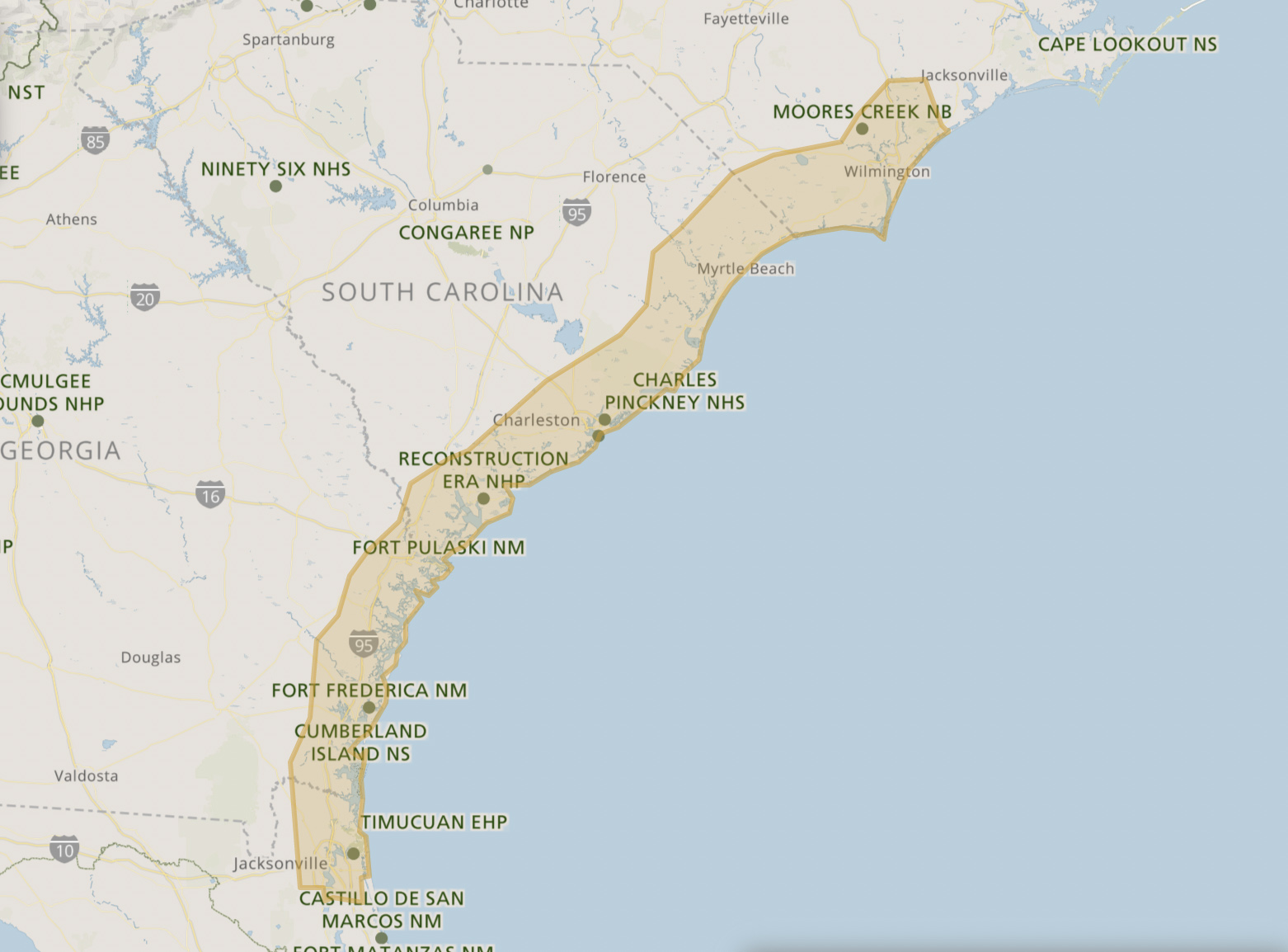
The Gullah Geechee people are the descendants of West and Central Africans who were enslaved and forced to labor on the rice, indigo, and cotton plantations of the coastal Lowcountry — from the Cape Fear region of North Carolina down through South Carolina and Georgia and into northern Florida.
Because the coastal islands and tidewater communities they worked on were geographically isolated for generations, the Gullah Geechee retained more direct linguistic and cultural ties to Africa than almost any other African American community. The result is one of the most distinctive cultural traditions in the United States: a creole language (also called Gullah or Geechee), spiritual practices, foodways, music, storytelling, and material arts — including, most visibly, the sweetgrass basket.
In 2006, the U.S. Congress designated the Gullah Geechee Cultural Heritage Corridor, recognizing the cultural significance of this stretch of coast and the people who have lived on it for more than three centuries.
Rice and the Basket
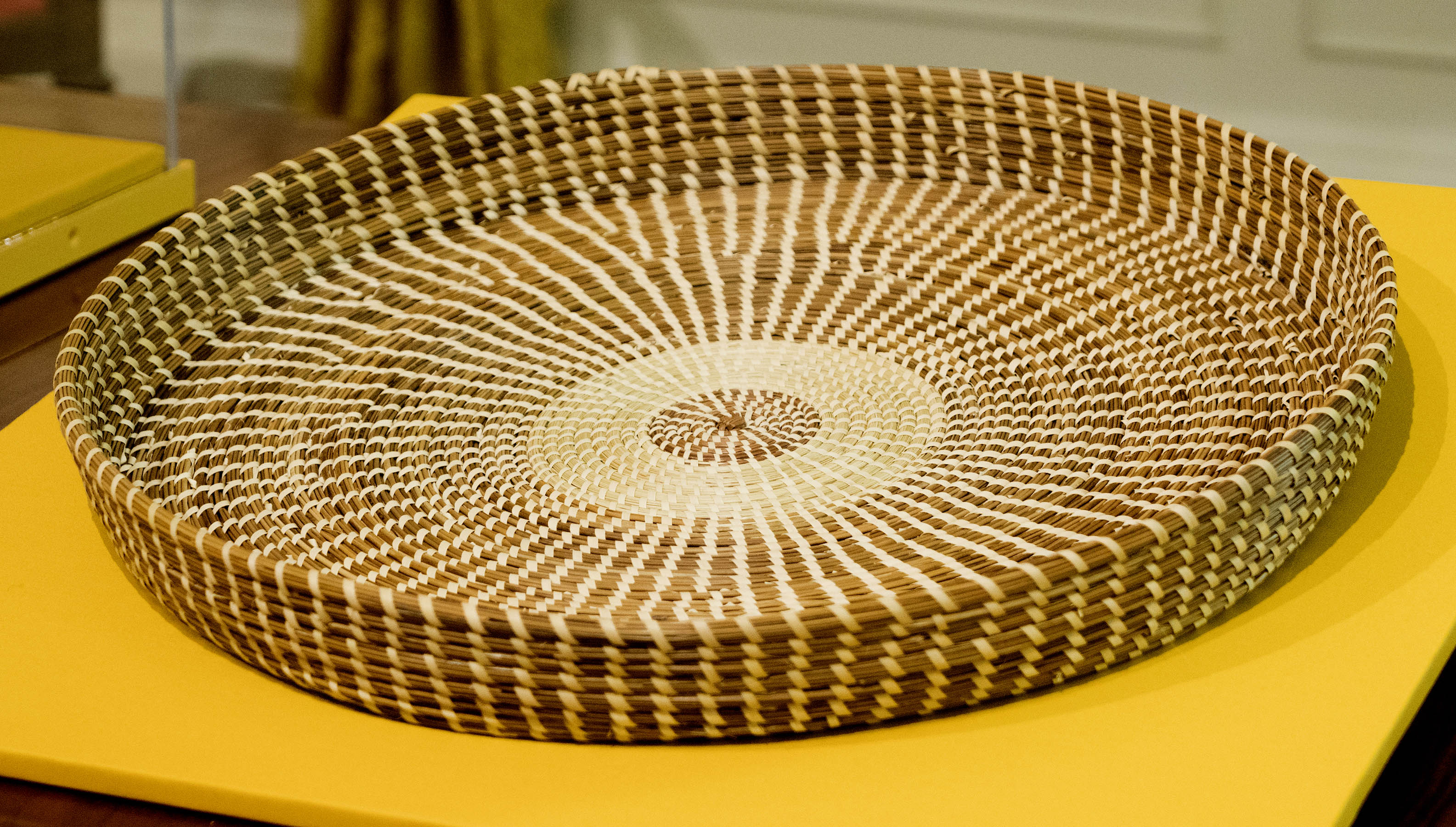
The rice that built Charleston's eighteenth-century wealth — Carolina Gold — required specialized agricultural and processing knowledge that European planters did not possess. Enslaved Africans, many from the rice-growing regions of Senegambia, Sierra Leone, and the Windward Coast, brought that knowledge with them. They built the tidal-flow irrigation systems, they planted, they harvested — and they wove the baskets the entire industry depended on.
The fanner — a flat coiled basket — was used to winnow rice: workers piled threshed grain onto the basket and tossed it into the breeze, letting the lighter chaff blow away. Other forms held seed, eggs, vegetables, and household goods. Every household needed them; every family that could weave did.
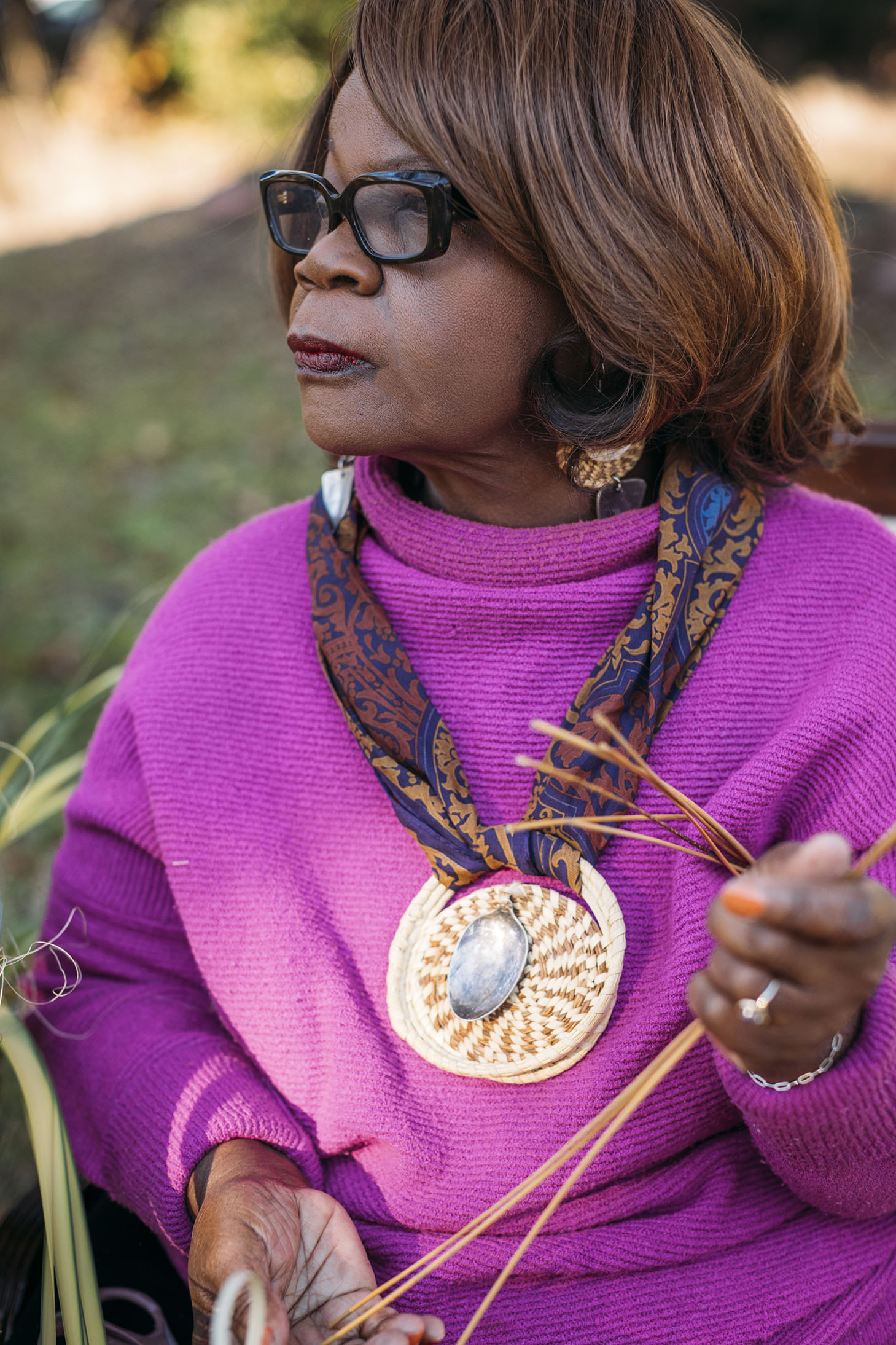
After emancipation, the basket survived — and slowly transformed. By the early twentieth century, weavers along U.S. Highway 17 north of Charleston had begun selling baskets to passing motorists from roadside stands. The functional fanner became one form among many: bread baskets, market baskets, sewing baskets, ceremonial pieces. Today, master weavers like Henrietta Snype work in both the historical forms and new ones — including jewelry — extending a tradition that is over three hundred years old on these shores.
The Tradition Today
Sweetgrass basketry has always been taught from one hand to the next — mother to daughter, grandmother to granddaughter, neighbor to child. There is no written manual that captures the knowledge of how to read a stand of grass, how to feel a coil's tension, how to start a base, how to finish a rim.
The coiled-grass technique traces to West and Central Africa. The Lowcountry adaptation is a creole — Senegambian, Mende, and other traditions meeting Carolina sweetgrass and palmetto.
Rising property values, restricted access to harvesting grounds, and the slow attrition of master weavers all threaten the craft.
Henrietta describes herself as "the middle generation." Workshops, school visits, and museum demonstrations are how the knowledge survives.
Further Reading
For an in-depth scholarly history of Lowcountry sweetgrass basketry, the canonical text is Row Upon Row: Sea Grass Baskets of the South Carolina Lowcountry by Dale Rosengarten (McKissick Museum / University of South Carolina Press). Avery Research Center for African American History and Culture at the College of Charleston holds one of the largest sweetgrass basket collections in the world, and the Gullah Geechee Cultural Heritage Corridor publishes resources at gullahgeecheecorridor.org.